Sunday, 11 April 2010

History of the Undersea Communications


The first submarine telegraph cable, laid by the brothers Jacob and John Watkins Brett between England and France in August 1850, was of simple construction - a copper conductor with gutta percha insulation and no armoring. It worked for only a day, then broke from chafing on rocks; another version says that the cable was hooked by a fisherman and destroyed, It quickly became apparent that cables needed to be armored to withstand not only the stresses of being laid and the risks of being damaged by fishing vessels, but also the predations of aquatic life.

The first wire ropes were made with iron wire, using the same manufacturing methods as for hemp rope. By 1834 wire ropes developed by the German engineer Wilhelm Albert were being used in the mines in Germany's Upper Harz district, and it was estimated that the additional manufacturing cost was more than covered by the much longer life of the wire rope over traditional hemp ropes. The new technology spread rapidly to Britain, and by the late 1830s there were a number of companies making wire rope.


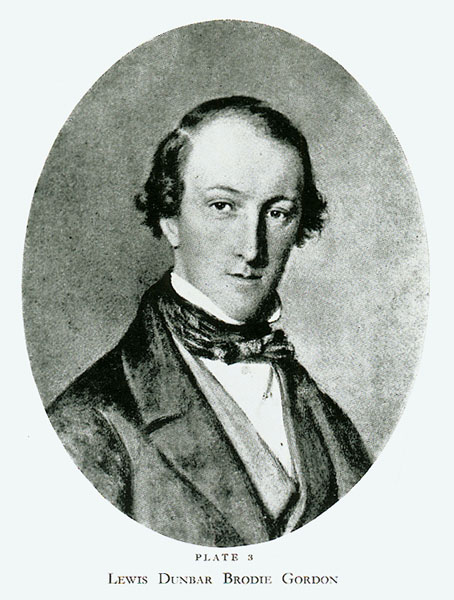
In 1837 Lewis Gordon, formerly an assistant to Brunel during the construction of the Thames Tunnel, made a career change to practical mining, and entered the Freiburg School of Mines in Germany, and then the Ecole Polytechnique in Paris. In 1838 he visited the mines at Clausthal in the Harz mountains, and met Wilhelm Albert. Impressed by what he saw, he wrote to his friend R.S. Newall in Britain on June 20th, 1838, urging him to "Invent a machine for making (wire ropes)".


Do you want to know more?


Friday, 12 March 2010

Miguel Delibes

Miguel Delibes Setién, 1920 - 2010 Valladolid–, Spanish novelist, short-story writer, and journalist. Born in Valladolid, Spain, Delibes studied law and economics and from 1945 was a professor of commercial law at the University of Valladolid, also working as a journalist.

He is known for his descriptions of rural life and for his psychological analysis of middle-lower-class characters.

Among his many works are La sombra del ciprés es alargada (1947), Diario de un cazador (1955), Smoke on the Ground (1962, tr. 1972), Five Hours with Mario (1966, tr. 1988), Diario de un jubilado (1995), and El hereje (1999).

He was awarded Spain's highest literary honor, the Cervantes Prize, in 1994.

He died today, may he rest in peace.

Learn more

Wednesday, 10 March 2010

New tools!

You have two new gadgets to use:

- Weather Forecast (check under the Newspapers)

- Drama plays, dialogues, etc (check the tools)

Enjoy them!:

The weather in the World

Dialogues

Thursday, 25 February 2010

Did you know?

Why is blue for boys and pink for girls?
In ancient times, it was believed that certain colors could combat the evil spirits that lingered over nurseries. Because blue was associated with the heavenly spirits, boys were clothed in that color, boys then being considered the most valuable resource to parents. Although baby girls did not have a color associated with them, they were mostly clothed in black. It was only in the Middle Ages when pink became associated with baby girls.

Go to the webpage: www.didyouknow.org

Watch the video: Did you kow?

Tuesday, 16 February 2010

Spanish Scientist, co-discoverer of the human oncogene

Mariano Barbacid Montalbán spent most of his professional career in the United States. In 1998, his return to Spain after a 24-year absence was greeted with extensive coverage in the media, not just in the medical trade press, but in the mainstream newspapers and magazines as well. His return, he said at the time, was not due to a sudden bout of homesickness but came after receiving an "offer no researcher could refuse".
The Spanish Minister of Public Health gave Barbacid the chance of heading a no-expense-spared national cancer research facility, the "Centro Nacional de Investigaciones Oncológicas Carlos III" (CNIO). With 100,000 square feet of lab space the center, the first of its kind in Spain, occupies an old disused hospital in Madrid, restored and converted at a cost of some $25 million and due to open in 2001. Meanwhile, his team's initial work was being carried out in borrowed lab space, with a grant from the pharmaceutical company Pfizer.

It is a personal triumph for Barbacid, co-discoverer of the human oncogene, who had criticized the lack of funding for cancer research. In modern Spain "this is one of the last remaining challenges", he has said. Half the center's annual budget of $30 million is paid out of Spain's National Health System and the other half from research grants.

Mariano Barbacid was born in Madrid in 1949. At age 25, shortly after receiving his doctorate in Science and with work offers from six American research centers, he moved to the United States. Between 1974 and 1988 Barbacid worked for the US National Cancer Institute in Maryland, first as a basic scientist investigating molecular and genetic oncology, and later carrying translational research into early diagnosis of cancer. In 1982 the team headed by Barbacid was one of three to first isolate a human oncogene, a major breakthrough which shed new light on the molecular basis of cancer.

Barbacid later worked for the Department of Molecular Biology at Bristol-Myers Squibb in Princeton, New Jersey, until March 1998 when, turning down another offer from the M. D. Anderson Cancer Center in Houston, Texas, he returned to Spain.